
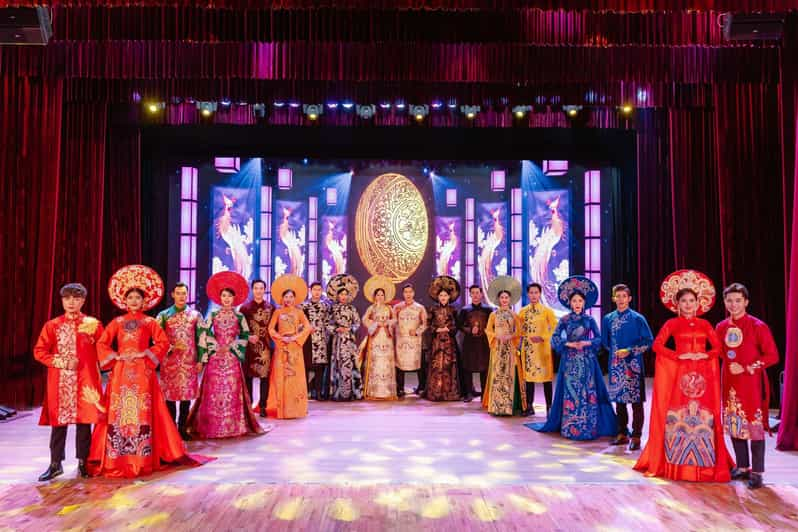
Reviewed · DA NANG CULTURAL SHOWS
Da Nang “The Ao Dai” Show: Timeless Vietnamese Elegance
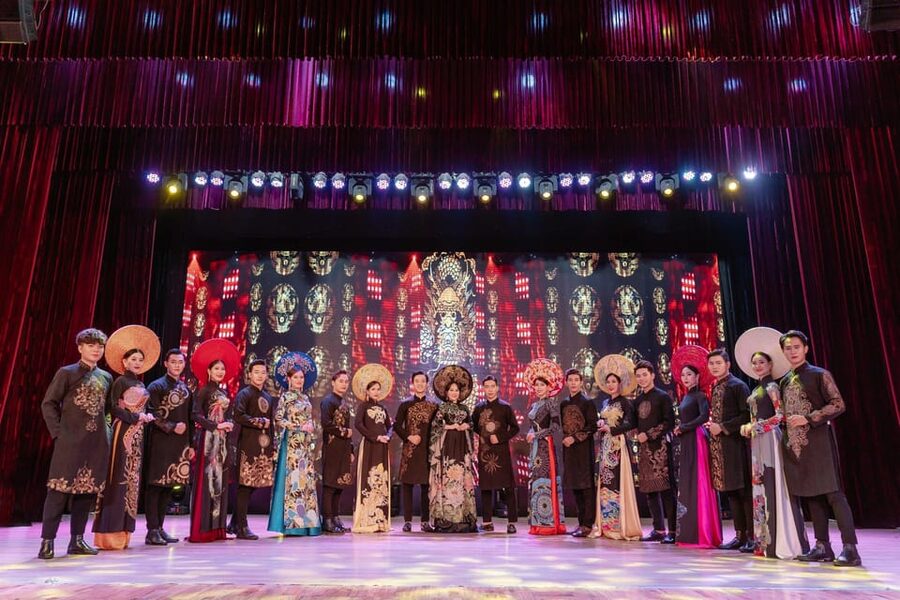
The Ao Dai Show uses one familiar garment to tell a much larger story: how Vietnamese dress connects the royal court, village life, school days, weddings, and modern culture. You’ll see the Ao Dai change across nearly 300 years, with scenes ranging from Nguyen Dynasty court costumes to the white uniforms associated with schoolgirls.
I like two things in particular: the program gives the clothing a historical setting instead of treating it as a runway parade, and the mix of dance, costumes, and stage scenes keeps the story visual. English text beside the stage helps you follow along, too.
The main consideration is that this is a staged cultural performance, not a guided visit to historic places. If you prefer museums or detailed spoken commentary, the show may feel light on explanation. Arrive at least 15 minutes early, even though one performance-goer found that allocated seating and good organization made a late arrival less stressful.
What to know before you go
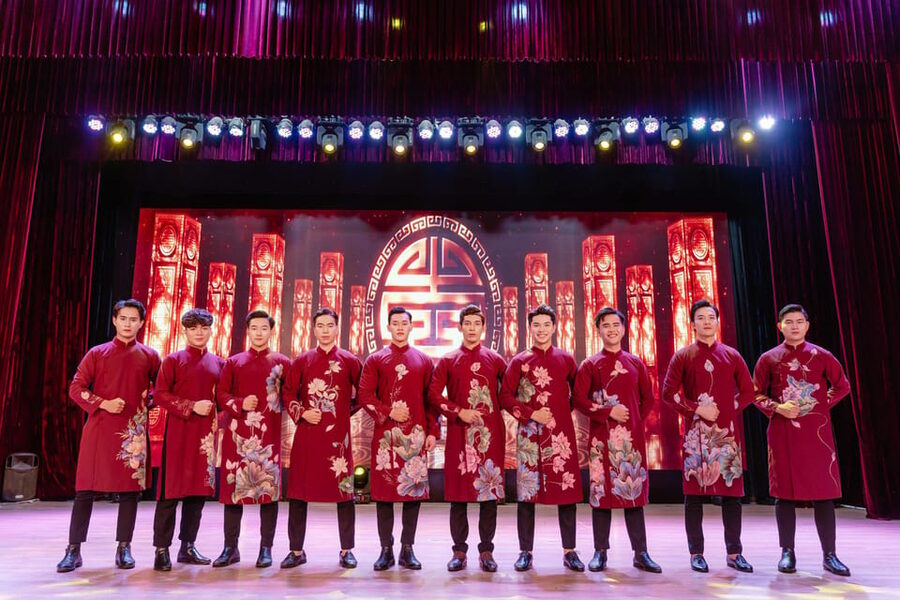
- The Ao Dai is the thread: The show traces the garment from Nguyen Dynasty-era dress through school uniforms and contemporary styles.
- Court and everyday life share the stage: Royal costumes appear alongside an old-market scene that evokes trade and ordinary life from the 17th to 19th centuries.
- Expect several kinds of performance: The program includes a wedding, a lotus dance, and a larger Ao Dai presentation, not just costume changes.
- English text helps explain the scenes: Narrative appears on both sides of the stage, giving you context while you watch.
- The ticket includes small extras: Refreshments and a small gift are included; transportation is not.
- Plan for a short evening activity: One account describes the performance as about an hour. Check the available start times when booking, and arrive 15 minutes early.
The Ao Dai tells the story
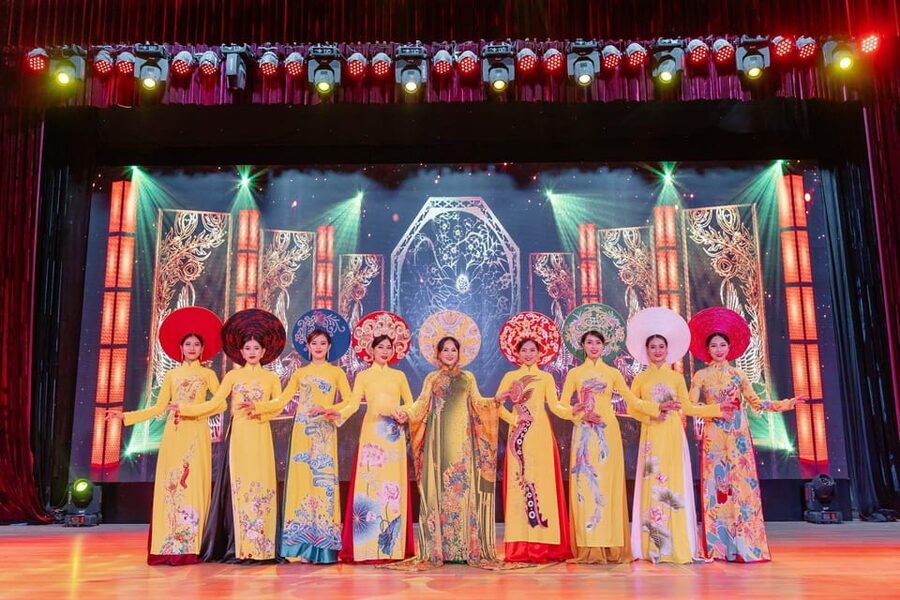
The Ao Dai is more than an elegant outfit here. The show treats it as a marker of changing Vietnamese life, moving from courtly formality to market scenes, school uniforms, wedding customs, and modern expression. That approach makes the performance useful even if you arrive knowing little about the garment.
The program covers nearly 300 years of Ao Dai culture and presents the dress as Vietnam’s national clothing since the Nguyen Dynasty. You see the idea through costumes and movement rather than through a long lecture. This is a good format if you want a first introduction to Vietnamese history that is visual, accessible, and compact.
I also like the connection the show draws between royal and folk traditions. A palace scene can make the garment look formal and distant; an old-market tableau brings it closer to daily life. That contrast gives the Ao Dai more meaning than a succession of attractive outfits would.
Still, set your expectations accordingly. This is a stage interpretation of history, not a detailed historical account. You’ll get memorable images and broad context, but the program’s descriptions do not promise a full explanation of every dynasty, garment detail, or custom.
More cultural shows around Da Nang:
- Da Nang: Charming Da Nang Show Ticket
★ 4.5 · 113 reviews - Da Nang: Charming Danang Show Ticket
★ 4.9 · 24 reviews - Da Nang: Charming Da Nang Show Ticket
★ 4.8 · 17 reviews
From the Nguyen court to the old market
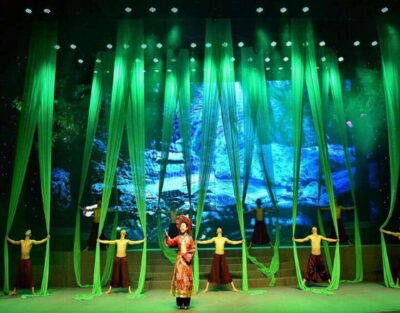
The opening section, called Timbre of the Royal Palace, recreates the dignity of the Nguyen Dynasty through costumes for kings, mandarins, empress dowagers, and maidens. The emphasis is on how clothing helped communicate rank and ceremony. If you’re drawn to royal history, this is likely to be one of the most visually striking parts of the show.
The court scene also sets up a contrast with the next period. Rather than leaving history in the palace, the program shifts to an old-market scene meant to evoke Vietnamese trade and everyday life from the 17th to 19th centuries. The performers wear older styles of Ao Dai, presented as simple, modest, elegant, and respectful.
This change in setting matters. It shows the garment as part of a broader culture, rather than an outfit reserved for the elite. You can watch for how the performance moves between formal court presentation and the more humble tone of market life.
The market is a staged reconstruction, not a visit to an actual historic market. That distinction is worth keeping in mind if you want documentary detail. Its value is visual: it gives the clothing a social setting and helps connect the show’s grand costumes to ordinary people.
Weddings, lotus dance, and school uniforms
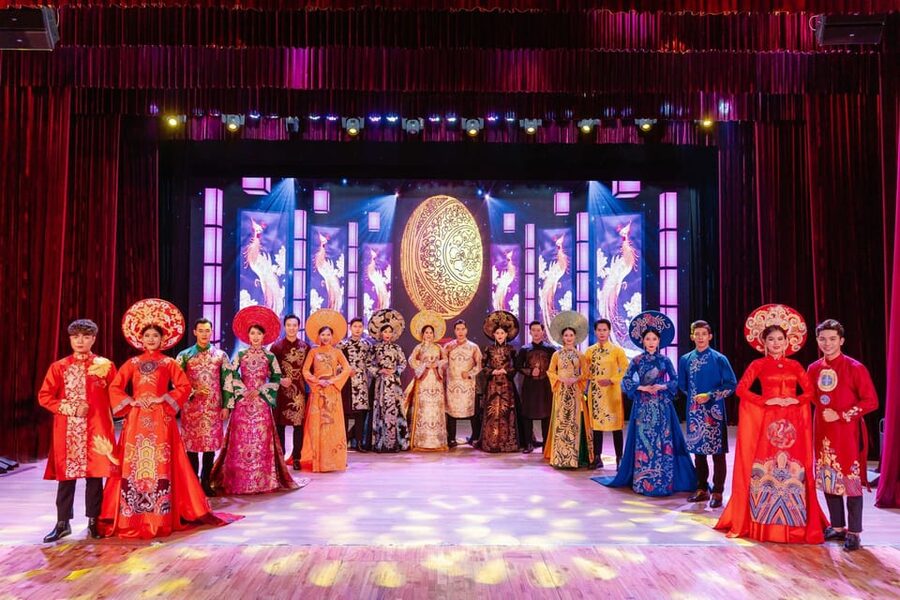
The traditional wedding segment turns from court and market life to family customs. It presents Vietnamese wedding traditions through a performance that draws on ritual standards and cultural practices from past and present. For you, this is a chance to see how the Ao Dai fits into a major life event, not just a historical period.
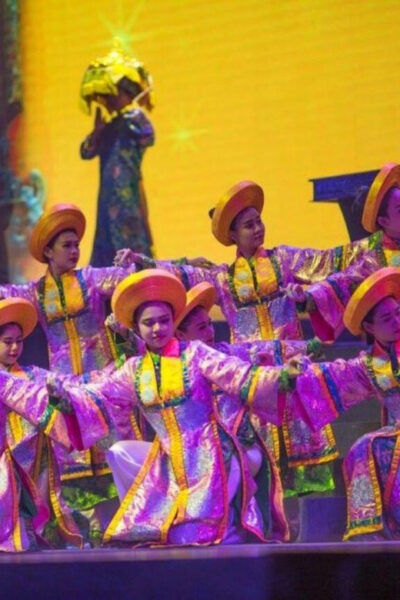
The show also includes a lotus dance inspired by Vietnam’s national flower. Its choreography combines traditional and contemporary movement, with the lotus used to suggest purity and elegance. This is a shift away from the history-focused tableaux, and it gives the program a more purely artistic interlude.
Then comes the white Ao Dai school uniform, associated in the program with Dong Khanh, described as Vietnam’s first girls’ school. The scene presents schoolgirls as graceful and modest, with education and polite conduct among the ideals attached to the school experience. It also reflects how the Ao Dai became part of modern public life.
This section carries a particular social perspective. Its description links girls’ education with childcare and family-care skills, alongside learning and communication. You may find that framing reflects traditional expectations more than a contemporary view of women’s roles. The scene is still useful for understanding how the school uniform became an enduring image of Vietnamese culture.
Together, these segments keep the show from becoming a parade of court clothing. You move through family ceremony, symbolic dance, and school life, each giving the Ao Dai a different meaning. The variety is part of the appeal, especially if you’re watching with children or with someone who might not want a full evening of historical explanation.
A finale that joins old and new
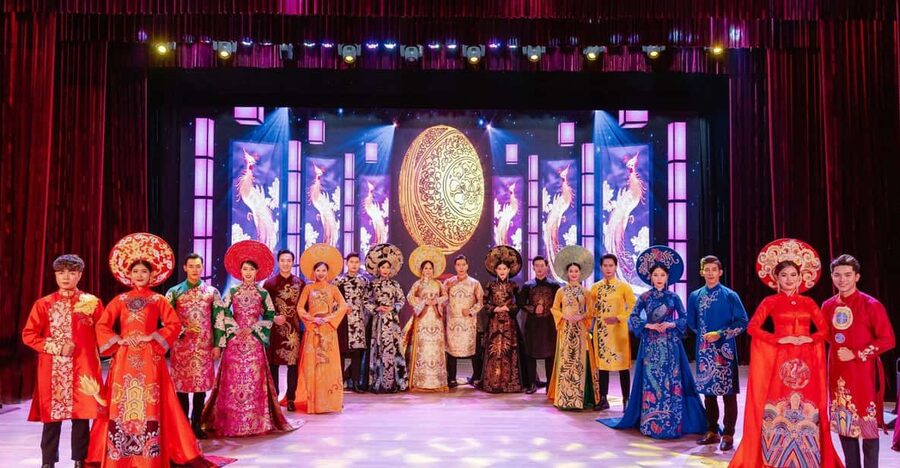
The closing Ao Dai presentation brings the show’s main theme together: Vietnamese culture moves from ancient times to the present, with royal and everyday traditions meeting modern influences. Costumes and performance do the explaining. The result is more about seeing cultural change than following a detailed timeline.
The show’s interactive element may also make the ending feel less like a formal recital. In one performance, visitors’ countries were included as part of the presentation. That suggests the cast may adapt parts of the performance to the audience, though you shouldn’t assume exactly how this will work on your night.
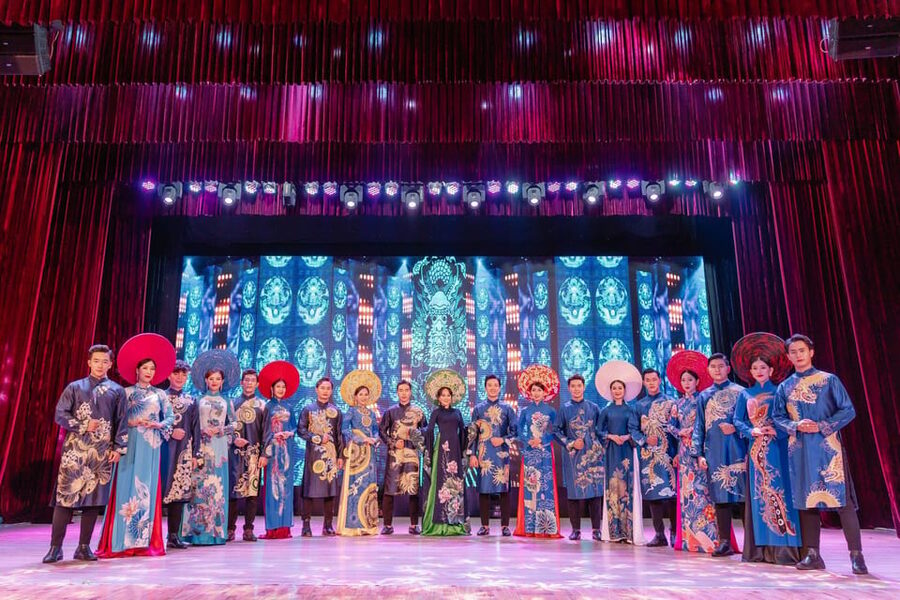
The colorful costumes are a central reason to go. They make changes in silhouette, setting, and formality easy to notice, even if you don’t know the technical names for the garments. The performance pairs those visuals with dance and a narrative displayed in English beside the stage, so you’re not left to guess at every scene.
A useful way to watch is to notice how the same garment shifts with its setting. Court dress signals hierarchy; older market clothing suggests ordinary life; white school Ao Dai points to education and youth; the wedding segment connects dress with family ritual. The show’s history is broad, but those transitions give you a clear thread to follow.
More shows around Da Nang:
- Da Nang: Han River Night Boat Trip with Show on Weekends
★ 3.8 · 455 reviews - Da Nang: Poseidon Cruise with Dinner and Dragon Bridge Show
★ 3.8 · 304 reviews - Tasty Dinner Han River Dragon Cruise by Yatch & Tradictional Show
★ 4.0 · 11 reviews - Sunrise My Son-Golden Bridge-Dragon Bridge Show & Seafood Meals
★ 5.0 · 10 reviews
English context and stage experience
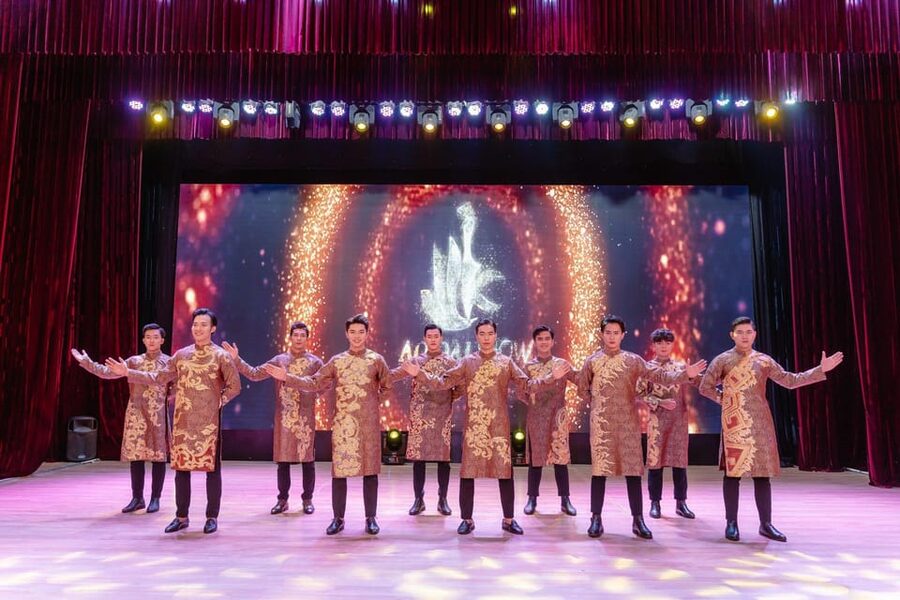
English text appears on both sides of the stage, providing a practical guide to what is happening. That is particularly helpful in a show that moves through separate historical and cultural scenes. You can look up for the costumes, then glance at the text when you want context.
The program is described as an interactive show, and one audience account specifically recalled the inclusion of visiting countries. That can add a playful touch, but the exact audience participation is not specified. If you prefer to watch quietly, the main performance still relies on dance, costume, and visual storytelling.
The service and seating arrangements have also been described as well organized. One person who arrived only five minutes before the start still found that good seats had been allocated and held. Treat that as a reassuring anecdote, not a reason to cut it close: the stated arrival guidance is to be there at least 15 minutes ahead, with your name and booking number ready.
The performance has been described as lasting about an hour. That makes it a manageable cultural stop if your Da Nang plans are full, though the activity is listed as valid for one day and start times depend on availability. Check the time that suits your plans before you reserve.
What the $17 ticket includes
At $17 per person, the ticket covers entry to the Ao Dai Show, refreshments, and a small gift. Transportation is not included, so you’ll need to make your own way to the Culture House of Ngu Hanh Son District. The supplied details do not give a transport route or travel time, so check your location in Da Nang before choosing a show time.
The price makes most sense if you value the performance as both entertainment and a cultural introduction. You get several distinct scenes in one sitting, from court costumes and market life to wedding traditions, a lotus dance, and school uniforms. The show’s compact format is also useful if you want an evening activity without committing a full day.
The trade-off is depth. A stage production can make clothing and customs memorable, but it cannot replace a museum visit or a specialist-led history talk. If you’re expecting extensive spoken explanation or a close look at historical garments, this may not satisfy that interest on its own.
For a short introduction, though, the combination of dance, English stage text, refreshments, and a gift is a reasonable package. The strongest value is the range of subjects presented through one cultural symbol. You’ll leave with a clearer sense of why the Ao Dai matters across different parts of Vietnamese life.
Who should book the show
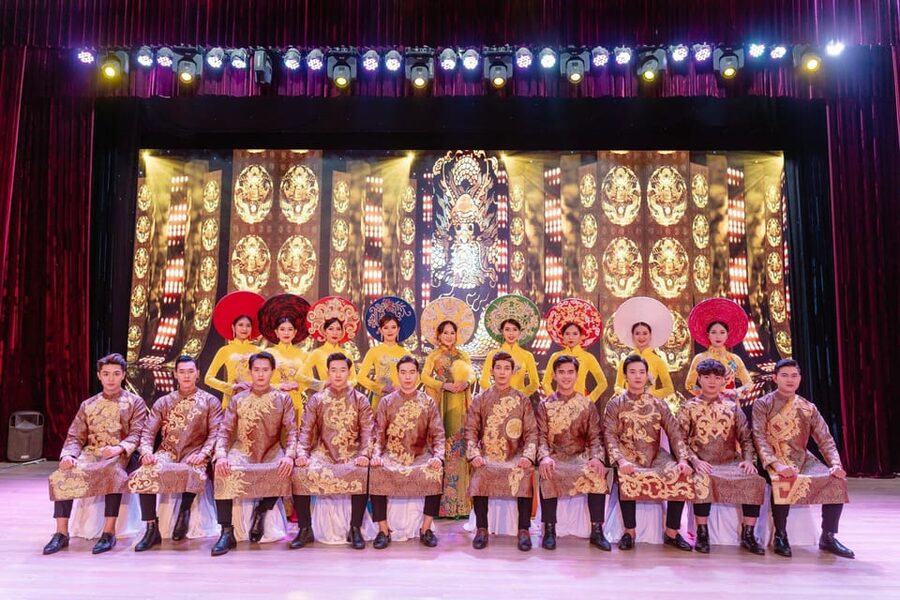
I’d consider this show if you want an accessible cultural activity in Da Nang, especially if costumes, dance, and visual storytelling appeal to you. It should suit couples, families, and first-time visitors who want an introduction to Vietnamese traditions without spending hours in a lecture or museum.
It may be less suitable if you’re looking for a highly detailed history lesson, an unscripted cultural encounter, or a visit to historic sites. The performance presents history on a stage, with broad themes and carefully arranged scenes. Go for the visual experience and the cultural connections, not for exhaustive historical detail.
The 4.9 rating from eight ratings is encouraging, but it is a small sample. More telling for your decision are the specific strengths of the format: colorful costumes, a range of scenes, English text to follow, and an interactive element that may acknowledge the audience. Those features make it easier to enjoy even if your interest in fashion is modest.
Practical details for your visit
The meeting point is the Culture House of Ngu Hanh Son District. Transportation is not included, so plan your route independently. The activity is wheelchair accessible, and English is the language listed for the host or greeter.
Arrive at least 15 minutes before the start. At the entrance, show the name and booking number used for the reservation. You can reserve without paying immediately, and cancellation is available up to 24 hours before the activity for a full refund.
Check the available start times before booking, since the exact performance schedule is not fixed in the details provided. If you’re arranging dinner or another activity afterward, leave a little breathing room rather than assuming the show will finish at an exact time.
Should you book the Ao Dai Show?
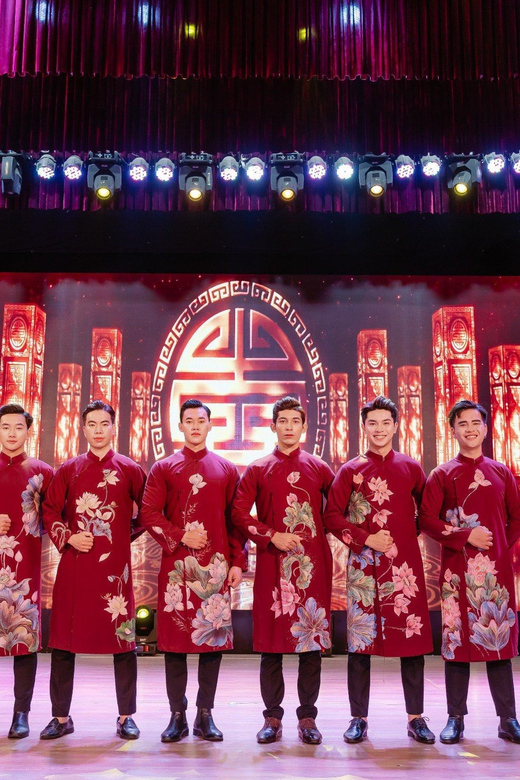
Book it if you want a colorful, roughly hour-long introduction to Vietnamese culture, with the Ao Dai linking court history, everyday trade, weddings, school life, and modern style. The program’s variety and English stage text are its strongest practical advantages.
Skip it if you want detailed historical analysis or a visit to real heritage sites. For a modest ticket price, though, this is a worthwhile choice when you want a polished cultural performance in Da Nang and are happy to learn through costumes and dance.
FAQ
How much does the Ao Dai Show cost?
The listed price is $17 per person.
How long is the performance?
One account describes the performance as about an hour. The activity is listed as valid for one day, and you should check available start times when booking.
Where does the show take place?
The meeting point is the Culture House of Ngu Hanh Son District in Da Nang.
Is transportation included?
No. Transportation is not included, so you need to arrange your own way to the venue.
What is included with the ticket?
The ticket includes admission to the Ao Dai Show, refreshments, and a small gift.
Is the show presented in English?
English is listed as the language for the host or greeter. Narrative text also appears at both sides of the stage in English.
How early should I arrive?
You should arrive at least 15 minutes before the show. At the entrance, show your name and booking number.
Can I cancel the booking?
Yes. You can cancel up to 24 hours in advance for a full refund. You can also reserve now and pay later.
Just in around Da Nang
- Guided Ba Na Hills & Golden Bridge Day Tour from Hoi An/Da Nang★ 4.5 · 7 reviews
- Airport Transfer (From Hotel in Hoi An to Da Nang Airport) 7 Seat Car★ 5.0 · 3 reviews
- DANANG Airport to Hoi An CITY OR RETURN By Private Car★ 5.0 · 16 reviews
- Da Nang Basket Boat Ride in Hoi An City with Release Lantern★ 5.0 · 3 reviews
- Transfer from Danang/Airport/Transtation to Hoi An by Private Car★ 5.0 · 9 reviews
- Marble Mountain -Buddha Statue -PeakMonkey Mountain -PRIVATE CAR★ 5.0 · 3 reviews
- Walking Food Tour of Da Nang★ 5.0 · 9 reviews
- Vietnam Central Private Package Tour★ 5.0 · 3 reviews
Da Nang Cultural Shows, compared.

Charming Da Nang Show: Culture, History, Art Vietnamese Show
Read our review →
Charming Da Nang Show : Culture-Art-History-LifeStyle of Vietnam
Read our review →
2026 Charming Da Nang Show Ticket with Hotel Pickup
Read our review →
Browse the lists this tour appears in